Nvidia CEO Jensen Huang admitted to an affair with a woman suspected of operating as a Chinese intelligence asset, triggering a formal board investigation into whether he misled shareholders and the board on national security implications. Huang has pledged full cooperation and apologized to his wife and the company.
Key points
Market impact. Nvidia stock plunged 8% on the disclosure, erasing roughly $200 billion in market value and signaling investor concern over leadership stability at the world's most valuable chipmaker. The scandal threatens to undermine confidence in Huang's stewardship at a critical moment for AI infrastructure demand.
Broader implications. The incident exposes vulnerability in U.S. tech leadership to foreign intelligence operations and raises questions about executive vetting in sensitive industries. Succession planning at Nvidia now moves to the foreground as investors assess whether Huang's position is tenable.
Sources (4)New York Post Business, CBS News, BBC US
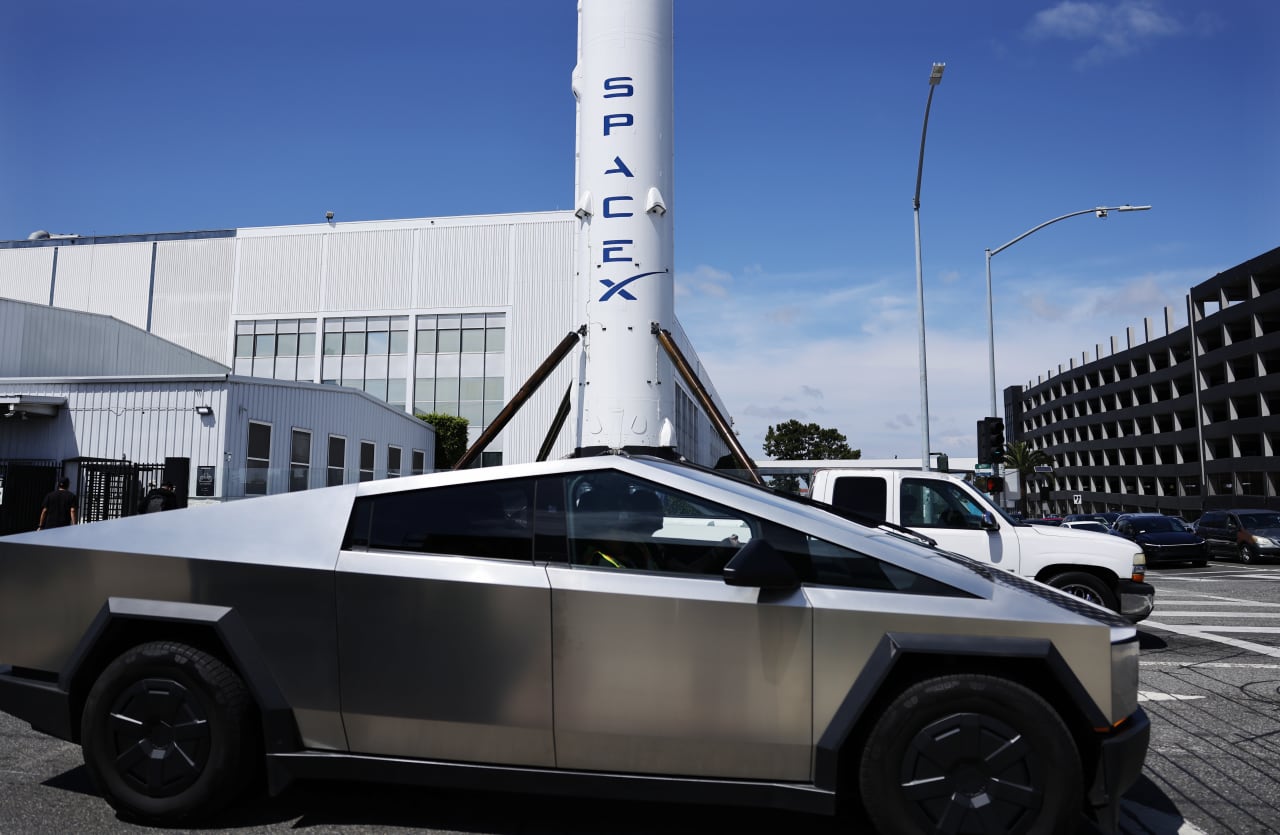
Elon Musk announced Tesla will return deposits for Cybertruck orders it cannot fulfill before halting production in mid-2027, acknowledging demand far exceeds manufacturing capacity. The company plans to add a production shift to clear backlog but will still face a substantial refund obligation.
Key points
Market impact. The announcement signals Tesla's struggle to scale Cybertruck output profitably and represents a cash outflow headwind. It also underscores the gap between pre-order hype and production reality, potentially dampening investor enthusiasm for Tesla's near-term revenue growth.
Broader implications. Musk's pivot toward robotics and AI over traditional vehicle production reflects strategic repositioning but leaves near-term automotive revenue under pressure. The Cybertruck's production constraints highlight manufacturing challenges that persist despite years of development.
China's goods exports jumped 35.2% year-over-year in October, exceeding analyst expectations of 33.5%, while imports also surged, causing the trade surplus to narrow sharply. The data reflects robust global demand for Chinese manufacturing despite geopolitical tensions.
Key points
Market impact. Strong Chinese export data supports commodity and logistics stocks while signaling resilient global supply chains. However, narrowing surplus may ease some protectionist pressure from the U.S., though tariff risks remain elevated under Trump administration policy.
Broader implications. China's export momentum contradicts recession fears in developed markets and demonstrates continued reliance on Chinese manufacturing for global commerce. The surge may embolden Beijing in trade negotiations while complicating Western efforts to decouple from Chinese supply chains.
Boeing announced a 5% reduction in its commercial airplane workforce through layoffs and attrition, citing slower-than-expected production increases for the 737 Max. The cuts reflect the company's struggle to stabilize manufacturing after years of safety crises and supply chain disruptions.
Key points
Market impact. The layoffs signal Boeing's cautious outlook on near-term demand and margin pressure, weighing on aerospace and defense sector sentiment. Reduced headcount may improve profitability per unit but signals weakening confidence in production acceleration timelines.
Broader implications. Boeing's pullback underscores persistent manufacturing challenges in commercial aviation and suggests the post-pandemic recovery in aircraft orders is moderating. Labor reductions may also strain supplier relationships and extend delivery delays for customers.
Sources (2)New York Times Business, The Guardian Business
Berkshire Hathaway accelerated share repurchases to $9.6 billion in the third quarter under CEO Greg Abel's leadership, even as overall profit fell 28% due to declining investment valuations. The company now holds $357 billion in cash, signaling confidence in its valuation despite earnings headwinds.
Key points
Market impact. Aggressive buybacks at elevated valuations suggest Berkshire views its stock as underpriced, potentially supporting BRK.B and BRK.A share prices. However, the profit decline and massive cash position raise questions about capital deployment strategy and management's conviction on investment opportunities.
Broader implications. Abel's willingness to accelerate buybacks marks a departure from Warren Buffett's historical caution and signals confidence in the conglomerate's long-term prospects. The $357 billion cash hoard remains a wildcard for potential acquisitions or market dislocations.
Qantas announced a partnership with Accenture to outsource 850 local IT roles to India as part of an AI-driven technology modernization program. CEO Vanessa Hudson cited unprecedented technological disruption as justification for the shift, which will relocate most positions offshore.
Key points
Market impact. The move signals cost-cutting pressure in aviation and validates investor thesis that AI automation will displace white-collar jobs in developed markets. Qantas shares may benefit from margin expansion, but the announcement risks labor relations backlash and regulatory scrutiny in Australia.
Broader implications. Qantas's outsourcing exemplifies the growing trend of multinational corporations shifting tech and back-office work to lower-cost jurisdictions under the guise of AI modernization. The move reflects broader labor market pressures and geopolitical tensions around skilled job migration.
SpaceX's CFO stated that new compute infrastructure investments recover their costs in less than a year, providing a counternarrative to broader market concerns about AI power financing sustainability. The claim comes as AI power stocks fell 6-9% on financing fears.
Key points
Market impact. SpaceX's efficiency claims may support sentiment in AI infrastructure and power stocks, offering evidence that compute ROI timelines are tightening. However, the statement requires independent verification and contrasts with broader industry uncertainty on power cost sustainability.
Broader implications. If validated, SpaceX's compute economics could reshape investor confidence in AI capex cycles and power demand durability. The claim also highlights SpaceX's competitive advantage in satellite-based power and connectivity for data centers.
President Trump stated the U.S. military conflict with Iran is effectively concluded while maintaining a "locked and loaded" posture should circumstances change. The statement signals de-escalation while preserving optionality for future strikes.
Key points
Market impact. The de-escalation rhetoric should ease oil price volatility and reduce geopolitical risk premiums in energy markets. However, the ambiguous language leaves room for renewed tensions, limiting the downside move in crude prices.
Broader implications. Trump's framing maintains U.S. deterrent credibility while signaling willingness to normalize relations, aligning with his broader Middle East strategy. The statement may precede diplomatic engagement but preserves military leverage.