Democrats clinched a historic sweep of Congress in midterm elections, with the Dow Jones jumping over 1,200 points and the S&P 500 surging on the results. The market rally reflects investor relief over reduced political gridlock and expectations for pro-growth policies under unified Democratic control.
Key points
Market impact. Risk assets across the board rallied: equities surged, the US dollar weakened on growth optimism, and Bitcoin climbed toward $80,500. The decisive outcome removes election uncertainty that had weighed on markets and signals potential for infrastructure and AI investment without Republican obstruction.
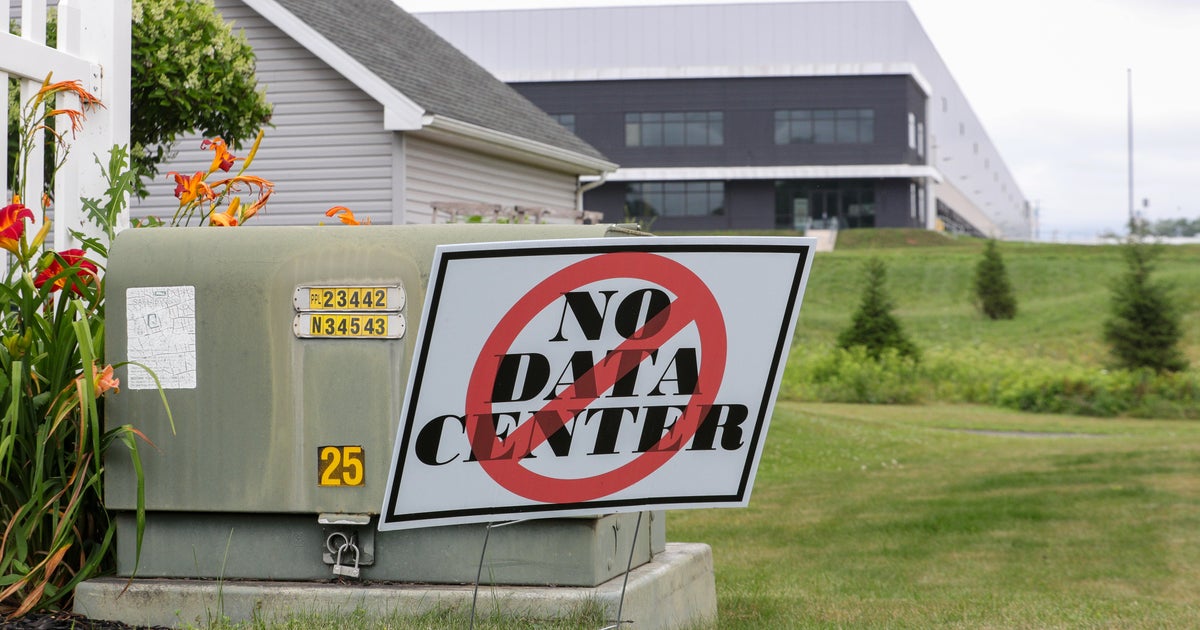
Broader implications. Democratic control of Congress eliminates divided government, enabling faster legislative action on spending and regulation. However, this outcome also emboldens anti-data center and anti-oligarchy movements that gained traction in state races, potentially constraining AI infrastructure expansion.
Sources (3)New York Post Business, CBS Money Watch, CNBC Top Stories
Neutral 03 sourcesdata center · midterm · regulation
Democratic victories in gubernatorial races signal a major headwind for data center expansion, with $173 million in election ads running against data centers and voters backing anti-data center candidates in multiple states. Experts predict Democratic control will slow permitting and development across the U.S.
Key points
Market impact. Companies dependent on rapid data center buildout—including hyperscalers, semiconductor suppliers, and AI infrastructure plays—face regulatory delays and higher costs. Qualcomm, Nvidia, and other chip suppliers may see demand timelines extended; construction spending growth that hit 217% annualized rates in September could decelerate sharply.
Broader implications. The anti-data center movement reflects voter concerns over energy consumption, water usage, and land use—issues that will now have political tailwind under Democratic governance. This could slow U.S. AI capability development relative to competitors and force companies to rebrand facilities as "AI compute campuses" to improve optics.
CVS Health announced plans to split its pharmacy chain from its health insurance and benefits management operations, reversing its 2017 acquisition of Aetna. The separation, planned for 2028, will create two independent public companies: CVS Pharmacy and a new entity housing Aetna and Caremark.
Key points
Market impact. The breakup signals the end of the vertical integration model that defined healthcare consolidation in the 2010s. CVS shares will likely trade at a premium post-split as investors value pure-play pharmacy and pure-play insurance separately; the move also pressures other integrated healthcare players to reconsider their strategies.
Broader implications. The split reflects persistent operational friction between retail pharmacy and insurance underwriting—two fundamentally different businesses with conflicting incentives. This reversal suggests the integrated healthcare thesis has failed to deliver expected synergies and may embolden antitrust scrutiny of other healthcare consolidations.
Sources (3)The Guardian Business, Market Watch, New York Times Business
SpaceX and Qualcomm signed a multiyear deal to build out base stations for Starlink Mobile's 5G cellular network, marking Qualcomm's expansion beyond handsets into satellite-terrestrial hybrid infrastructure. The partnership positions Qualcomm as the core technology provider for SpaceX's push into consumer mobile services.
Key points
Market impact. Qualcomm, which lagged the semiconductor rally this year, gains a high-growth revenue stream outside the saturated smartphone market. The deal also validates Starlink Mobile's technical viability and accelerates its competitive threat to terrestrial carriers like Verizon and AT&T, potentially pressuring their valuations.
Broader implications. This partnership signals a structural shift in telecom infrastructure toward satellite-ground hybrid networks, reducing dependence on traditional cellular towers. It also deepens Musk's control over critical infrastructure—from power (Tesla) to internet (Starlink) to communications—raising regulatory questions about market concentration.
Sources (3)Market Watch, The Verge, CNBC Top Stories
Bearish −182 sourceselon musk · tesla · election spending
Elon Musk's record $446 million spending blitz on Republican midterm candidates yielded minimal returns, with Democrats sweeping Congress despite his unprecedented investment. Tesla and SpaceX shares dropped sharply following the election results, reflecting investor concern over Musk's political miscalculation and potential Democratic retaliation.
Key points
Market impact. Tesla and SpaceX face heightened regulatory risk under a Democratic Congress hostile to Musk. Potential investigations into labor practices, environmental compliance, and government contracts could weigh on valuations. The stock decline also signals market skepticism about Musk's judgment in deploying capital on political outcomes rather than business fundamentals.
Broader implications. Musk's failed election gambit demonstrates the limits of billionaire political spending when divorced from grassroots support. It also invites scrutiny of his dual roles as CEO and political actor, raising questions about whether shareholder interests align with his personal political agenda.
Sources (2)The Guardian World News, Business Insider
Strong bearish −423 sourcesrba · interest rates · australia
The Reserve Bank of Australia raised its cash rate by 25 basis points to 4.85%, the highest level since 2008, marking the fifth rate hike this year. The move signals the RBA's determination to combat persistent inflation despite economic headwinds and comes as eurozone inflation hit 4% for the first time in three years.
Key points
Market impact. Higher Australian rates strengthen the AUD and increase borrowing costs for companies and consumers, potentially dampening growth. The RBA's aggressive stance also signals that central banks globally remain in tightening mode, supporting higher bond yields and pressuring equities sensitive to discount rates.
Broader implications. The RBA's continued hiking cycle, despite slowing growth, reflects the challenge central banks face in controlling inflation without triggering recession. This dynamic will likely persist across developed economies, keeping financial conditions tight and constraining asset valuations into 2027.
Sources (3)BBC Business, The Guardian World News, WSJ Economy
McDonald's reported its first comparable sales decline in the U.S., with a 0.2% drop in the latest quarter, prompting CEO Christopher Kempczinski to test cheaper menu items at select locations. The company is attempting to reverse weakness by competing on price rather than premium offerings.
Key points
Market impact. The sales miss signals consumer pullback in quick-service dining amid persistent inflation and wage pressures. McDonald's pivot to value pricing could compress margins if execution falters, and the move suggests QSR operators face demand elasticity they haven't encountered in years. Competitors like Wendy's and Burger King face similar pressures.
Broader implications. The decline reflects broader consumer stress despite strong headline employment data, suggesting wage growth hasn't kept pace with cumulative inflation. This dynamic could persist through 2027 if central banks maintain restrictive policy, pressuring consumer discretionary stocks.
Sources (2)CBS Money Watch, New York Post Business
Strong bearish −453 sourcesfrench blood bank · cyberattack · infrastructure
Cyberattackers targeted French blood banks by manipulating storage temperature thresholds to dangerously high levels, part of a broader wave of attacks on European critical infrastructure including supermarket freezers. French authorities thwarted the attack before blood products were compromised, but the incident exposed vulnerabilities in medical supply chains.
Key points
Market impact. The attack highlights cybersecurity risks in healthcare and food supply infrastructure, likely driving increased spending on industrial control system security and backup systems. Healthcare IT vendors and cybersecurity firms specializing in critical infrastructure will see elevated demand and pricing power.
Broader implications. The coordinated nature of attacks across Europe suggests state-sponsored or well-organized criminal activity targeting essential services. This will accelerate regulatory mandates for infrastructure hardening and may prompt NATO and EU responses, raising geopolitical tensions.
Sources (3)CBS News, ABC News, The Guardian World News
Crude oil prices fell below $90 a barrel after Vice President JD Vance blamed Republican midterm losses on the Iran war, signaling potential diplomatic breakthrough. Brent crude dropped over 6% to $105.55, the lowest in two weeks, as markets priced in reduced Middle East tensions under Democratic governance.
Key points
Market impact. Lower oil prices benefit consumers and reduce inflation pressures, supporting equity valuations and consumer discretionary spending. However, Goldman Sachs warned Brent could reach $140 if tensions escalate, creating significant upside risk. Airlines like JetBlue, which have raised baggage fees three times this year to offset fuel costs, may see margin relief.
Sources (3)CNBC Top Stories, The Guardian World News, Market Watch