Australia's Reserve Bank raised its cash rate by 25 basis points to 4.85%, marking the fifth hike this year and the highest level since 2008. The move mirrors tightening across the developed world: Norges Bank signaled readiness to hike further, while eurozone inflation hit 4% for the first time in three years, prompting rate hike expectations.
Key points
Market impact. Higher rates in Australia, Norway, and the eurozone will pressure equities and emerging markets while supporting currency valuations in those regions. The RBA's aggressive stance—the fifth hike this cycle—signals central banks remain committed to fighting inflation despite recession risks, keeping bond yields elevated and limiting downside for the US dollar.
Broader implications. Global monetary tightening is now synchronized across major economies, constraining credit availability and growth. This backdrop makes equity valuations vulnerable if corporate earnings disappoint, particularly in rate-sensitive sectors like technology and real estate.
Sources (3)CNBC Economy, The Guardian World News, WSJ Economy
CVS Health announced plans to split its pharmacy chain from its insurance and benefits management operations, reversing its 2018 acquisition of Aetna. The separation, planned for 2028, will create two independent companies: CVS Pharmacy and a health insurance entity housing Aetna and Caremark.
Key points
Market impact. The breakup signals investor skepticism toward vertical integration in healthcare and may unlock shareholder value if the two entities trade at higher multiples separately. Pharmacy operators and health insurers will face new competitive dynamics; pure-play pharmacy exposure becomes available to investors for the first time since 2018.
Broader implications. This reversal reflects broader pressure on conglomerate structures and suggests the integrated healthcare model—once seen as the future—has failed to deliver expected synergies. Regulators and activists have increasingly scrutinized vertical integration in healthcare, making separation a strategic necessity.
Sources (3)The Guardian Business, Market Watch, New York Times Business
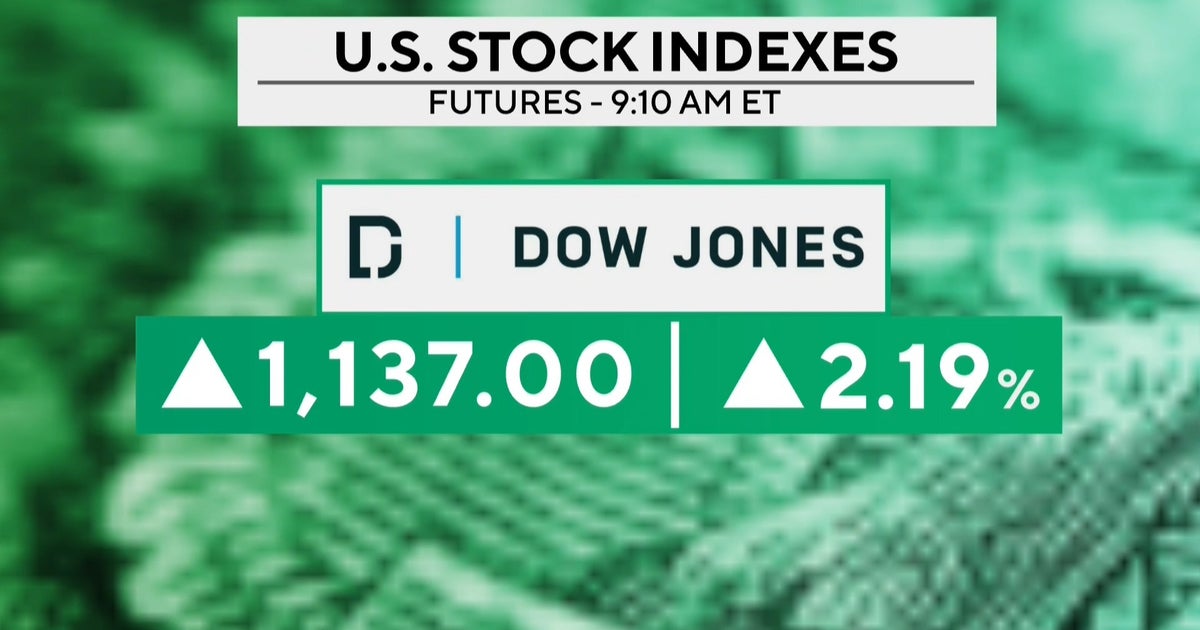
US equities rallied sharply after Democrats won decisive midterm victories and took control of Congress. The Dow futures jumped 700 points as investors repositioned for a Democratic-controlled government, with risk assets broadly outperforming amid expectations for policy shifts on regulation and trade.
Key points
Market impact. The rally reflects relief that Republicans did not secure a sweep, which would have enabled aggressive tax cuts and deregulation that markets feared could overheat growth and inflation. Tech stocks benefited on reduced regulatory risk, while oil prices fell on hopes for diplomatic resolution to the Iran conflict under a Democratic Congress.
Broader implications. Historical data shows the S&P 500 typically gains in the year following midterms, but the outcome now depends on whether Democrats can deliver on cost-cutting and trade policy rollbacks without triggering recession. Political gridlock may actually constrain both spending and rate cuts, complicating the growth narrative.
Sources (3)CBS Money Watch, Market Watch, CNBC Top Stories
Qualcomm and SpaceX signed a multiyear agreement to develop base station technology for Starlink Mobile's cellular network, marking Qualcomm's expansion beyond handsets into satellite-terrestrial hybrid infrastructure. The deal positions Qualcomm as a critical supplier for SpaceX's push into consumer mobile services.
Key points
Market impact. Qualcomm shares rallied on the news as the deal diversifies revenue streams beyond smartphones and signals the semiconductor giant's relevance in next-generation network buildout. SpaceX gains a proven partner for 5G infrastructure, reducing technical risk for its Starlink Mobile launch and potentially accelerating deployment timelines.
Broader implications. The partnership underscores the convergence of satellite and terrestrial networks as a competitive threat to traditional telecom carriers. It also validates Qualcomm's pivot away from smartphone dependency, a structural headwind that has weighed on the stock relative to peers.
Sources (3)Market Watch, The Verge, CNBC Top Stories
Neutral 03 sourcesdata center · midterm · democrats
Democratic wins in multiple gubernatorial races are expected to slow data center development across the US, as newly elected governors have signaled opposition to large-scale data center projects. Environmental and energy concerns drove $173 million in anti-data center election advertising, which proved effective in key races.
Key points
Market impact. Infrastructure and real estate companies dependent on data center buildout face permitting delays and higher development costs. Cloud providers (AWS, Microsoft Azure, Google Cloud) may see capex efficiency decline as they navigate stricter environmental reviews and local opposition, potentially pressuring margins and deployment speed.
Broader implications. The data center backlash reflects broader tension between AI infrastructure demands and local environmental/energy concerns. Democratic control of key states signals that data center expansion will face regulatory friction, potentially shifting investment to Republican-controlled regions or overseas, fragmenting the US cloud infrastructure advantage.
Bearish −393 sourceselon musk · tesla · election spending
Elon Musk spent nearly half a billion dollars supporting Republican candidates in the midterms, only to see the GOP suffer steep losses and Democrats take control of Congress. Tesla and SpaceX shares declined sharply as investors absorbed the political miscalculation and the prospect of Democratic scrutiny of Musk's business interests.
Key points
Market impact. Tesla faces potential regulatory headwinds on EV subsidies and labor practices under a Democratic Congress, while SpaceX's government contracts and Starlink subsidies may face renewed scrutiny. The stock decline reflects both the failed political bet and renewed uncertainty around regulatory treatment of Musk's enterprises.
Broader implications. The outcome demonstrates the risks of billionaire political spending and signals that Democratic control will likely result in investigations into Musk and his companies. This sets a precedent for how political outcomes can directly impact valuations of founder-led companies with concentrated political exposure.
Sources (3)The Guardian World News, Business Insider, New York Times Business
Crude oil prices tumbled below $90 per barrel after the midterm elections, with Vice President JD Vance blaming Republican losses on voter fatigue with the Iran conflict. Brent crude fell to $105.55, the lowest in two weeks, as markets priced in reduced geopolitical risk and potential diplomatic progress under Democratic control.
Key points
Market impact. Lower oil prices benefit consumers and reduce inflation expectations, supporting equities and potentially extending the rally in growth stocks. Energy stocks face headwinds, but the decline in crude reduces input costs for airlines, shipping, and manufacturing, providing margin relief across cyclical sectors.
Broader implications. Goldman Sachs warned that Brent could still reach $140 if Middle East tensions escalate, but the midterm outcome has shifted the baseline toward de-escalation. A Democratic Congress may pursue diplomatic channels with Iran, reducing the tail risk of supply disruptions that had kept oil elevated.
Sources (3)CNBC Top Stories, The Guardian World News, Market Watch
Neutral −83 sourcesmcdonald's · sales · value menu
McDonald's reported its first US comparable sales decline in recent quarters, with CEO Christopher Kempczinski announcing plans to test new value menu options at select locations. The slowdown reflects consumer pullback amid higher prices and intensifying competition in the quick-service restaurant sector.
Key points
Market impact. McDonald's stock faces pressure if value initiatives cannibalize margins or fail to reverse traffic declines. The move signals that pricing power has limits in the QSR space and that consumers are trading down, a potential leading indicator for broader consumer weakness in discretionary spending.
Broader implications. The sales decline contradicts the narrative of consumer resilience and suggests that lower-income consumers are feeling margin compression. If McDonald's—a bellwether for mass-market spending—cannot maintain traffic at current price points, it signals potential deterioration in consumer health heading into 2027.
Sources (3)CBS Money Watch, YouTube - Yahoo Finance, New York Post Business
Multiple French blood banks suffered a coordinated cyberattack that attempted to raise storage temperatures to dangerous levels, following similar attacks on European supermarket freezers. French authorities thwarted the attack before blood products were compromised, but the incident exposed vulnerabilities in critical healthcare infrastructure.
Key points
Market impact. Cybersecurity firms and healthcare IT vendors may see increased demand for hardened infrastructure. Healthcare providers face pressure to upgrade legacy systems, creating capex cycles for companies specializing in industrial control system security and resilience.
Sources (3)CBS News, ABC News, The Guardian World News