Nvidia's board launched an investigation into CEO Jensen Huang after he admitted to an affair with a woman suspected of ties to Chinese intelligence. Huang apologized to his wife, the company, and shareholders, pledging full cooperation with the probe. The board has found no evidence that company secrets or national security were compromised, but is examining whether Huang intentionally misled shareholders and the board.
Key points
Market impact. Nvidia stock dropped 8% on the news, erasing roughly $200 billion in market value and triggering a broader selloff in AI-related equities. Wall Street is now openly discussing succession scenarios and whether Huang's position as CEO is tenable. The scandal represents the largest single-day market impact tied to a CEO personal matter in recent memory.
Broader implications. The incident exposes vulnerabilities in how U.S. tech leadership manages national security risks and personal conduct. It also signals investor anxiety about concentration risk in AI infrastructure, where Nvidia's dominance makes any leadership uncertainty a systemic concern.
Sources (3)CBS News, New York Post Business, BBC US
Elon Musk announced that Tesla will refund a significant portion of Cybertruck deposits because demand far exceeds production capacity before the line shuts down in approximately eight months. The company is adding a production shift to clear orders, but Musk acknowledged that "a lot" of deposits will have to be returned. This marks a reversal from Tesla's earlier strategy of ramping Cybertruck production indefinitely.
Key points
Market impact. The announcement signals Tesla's pivot away from Cybertruck as a long-term revenue driver, redirecting resources toward the Cybercab and autonomous robotics—Musk's stated priority. This could pressure Tesla's near-term cash flow and raises questions about the Cybertruck's profitability and market reception relative to initial hype.
Broader implications. The decision underscores Tesla's struggle to balance production reality with investor expectations around new vehicle programs. It also reflects broader EV market softening, where demand for niche vehicles like the Cybertruck has proven more limited than anticipated.
Boeing announced a 5% workforce reduction in its commercial airplane division, citing slower-than-expected production increases for the 737 Max and other jets. The cuts will occur through a combination of layoffs and attrition as the company moderates its ramp-up pace. This follows months of supply-chain constraints and quality control challenges that have hampered Boeing's recovery.
Key points
Market impact. The move signals Boeing's acknowledgment that near-term demand and supply constraints will persist longer than previously guided. It may pressure Boeing's margins and free cash flow, though it could also improve near-term profitability by reducing overhead. Suppliers and aerospace contractors dependent on Boeing ramp-up will face reduced orders.
Broader implications. Boeing's pullback reflects broader aerospace industry headwinds, including labor shortages, supply-chain fragmentation, and lingering 737 Max reputational damage. The company remains under pressure to stabilize operations while managing investor expectations around recovery timing.
Sources (3)New York Times Business, The Guardian Business, CNBC Business
Berkshire Hathaway accelerated share repurchases to $9.6 billion in Q3 under CEO Greg Abel's leadership, even as overall profit fell 28% and operating earnings declined. The company now holds $357 billion in cash, a record. Geico's underwriting losses remain the primary drag, with the insurance unit's deteriorating performance offsetting gains elsewhere in the portfolio.
Key points
Market impact. The aggressive buyback stance suggests Berkshire views its own stock as undervalued despite profit headwinds. However, the profit decline and Geico's ongoing losses raise questions about whether capital is being deployed optimally. Investors are watching whether Abel will make strategic moves to fix Geico or continue financial engineering.
Broader implications. Geico's struggles reflect broader insurance industry challenges from inflation and underwriting discipline. Berkshire's massive cash position and buyback activity signal confidence in long-term valuations but also hint at limited acquisition opportunities in the current environment.
Sources (3)Market Watch, New York Post Business, ABC News
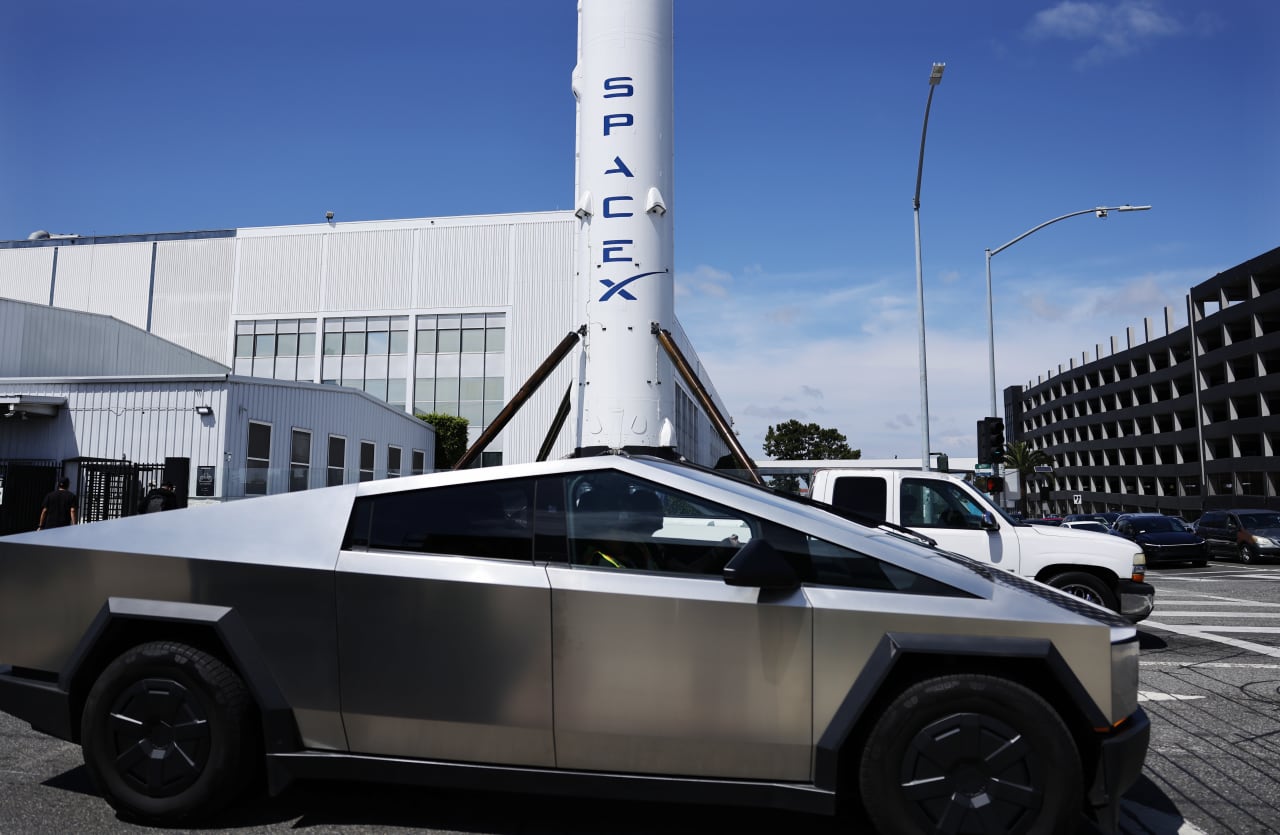
SpaceX's CFO stated that the company's new compute infrastructure investments recover their full cost in less than one year, a claim made as AI power stocks fell 6-9% on broader financing concerns. SpaceX also implemented staggered stock vesting to mitigate the impact of its volatile equity on major indexes, addressing investor fears about market concentration risk.
Key points
Market impact. SpaceX's payback claim stands in sharp contrast to market skepticism about AI infrastructure ROI and suggests the company sees faster monetization paths than competitors. The staggered vesting structure reduces tail risk for index funds holding SpaceX shares, potentially supporting a higher valuation multiple.
Broader implications. The statement reflects growing investor anxiety about whether AI capex spending will generate adequate returns, particularly as power and cooling constraints tighten. SpaceX's confidence in sub-one-year payback cycles suggests the company may have unique advantages in compute efficiency or pricing power.
Neutral +73 sourcesdata centers · google · political backlash
Political opposition to data center development is intensifying across the U.S. and Europe, with voters and local activists blocking new projects. Google acquired Crusoe Energy's troubled Wyoming data center project, while heavy civil contractor Tutor Perini reported that post-election sentiment has shifted sharply away from data center work. Environmental and community concerns about power consumption and land use are driving the resistance.
Key points
Market impact. Permitting delays and project cancellations will constrain AI infrastructure supply, potentially supporting pricing power for existing operators but raising capex costs for new builds. Companies like Google and Amazon may face higher development costs and longer timelines, pressuring near-term margin expansion. Construction contractors are already pivoting away from data center work.
Broader implications. The backlash threatens to become a structural constraint on AI scaling, as power grids and land availability become political flashpoints. This could accelerate investment in alternative technologies like geothermal and nuclear power, and may shift competitive advantage toward companies with existing infrastructure or political capital in permissive jurisdictions.
Sources (3)TechCrunch, CBS Money Watch, Construction Dive
Strong bearish −851 sourcechildren's place · bankruptcy · retail
Children's Place, a specialty children's apparel retailer, filed for Chapter 11 bankruptcy protection and is soliciting bids from potential acquirers with a December deadline. The filing reflects persistent challenges in brick-and-mortar retail, particularly in the discretionary children's clothing segment where e-commerce competition and consumer spending pullback have eroded margins.
Key points
Market impact. The bankruptcy signals continued weakness in specialty retail and may trigger asset sales at distressed prices, pressuring comparable retailers in the children's apparel space. Creditors and landlords will face haircuts, while any acquirer will likely demand significant operational restructuring.
Broader implications. Children's Place joins a growing list of specialty retailers struggling to compete in a bifurcated market dominated by e-commerce giants and fast-fashion players. The filing underscores structural headwinds in traditional retail real estate and consumer discretionary spending.
Botswana's president announced that the country will increase its stake in De Beers to 30% under the terms of Anglo American's proposed sale of the diamond producer. The move reflects Botswana's determination to secure greater control over its primary natural resource and revenue source. Negotiations are ongoing, with the deal expected to close by year-end.
Key points
Market impact. The increased government stake will reduce Anglo American's ownership and control, potentially affecting dividend policy and strategic direction. De Beers' valuation and governance structure will shift, with implications for minority shareholders and the broader diamond industry consolidation narrative.
Broader implications. The deal exemplifies resource nationalism trends in Africa, where governments are asserting greater ownership of strategic commodities. It also reflects De Beers' declining market dominance in a sector facing structural headwinds from lab-grown diamonds and shifting consumer preferences.