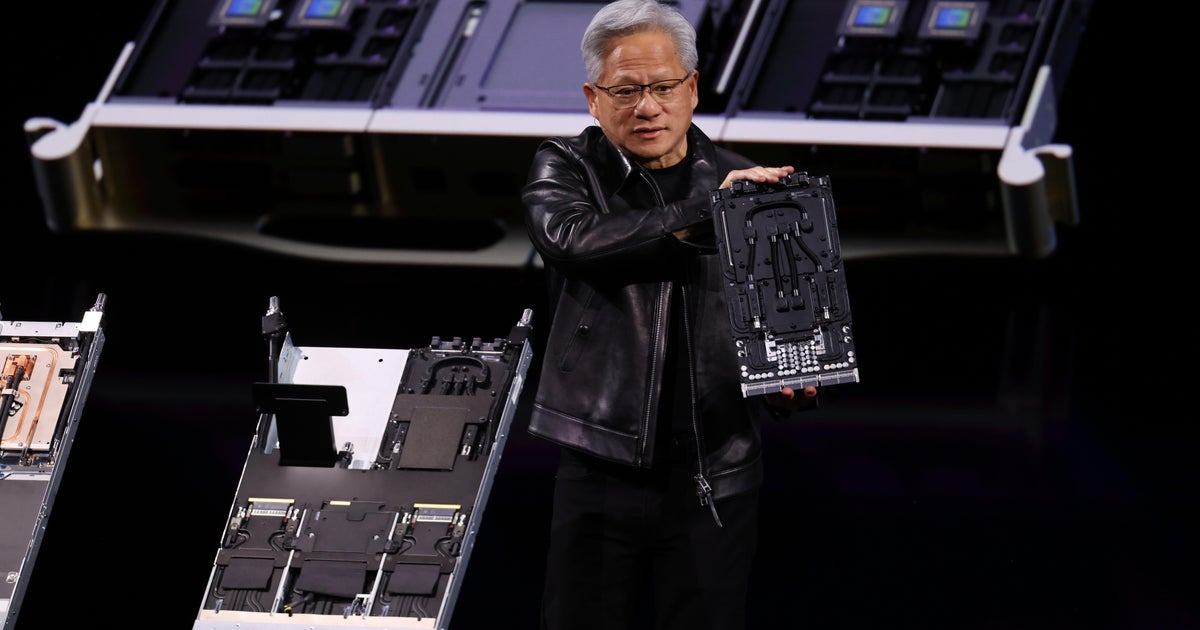
Jensen Huang, co-founder and CEO of Nvidia, resigned effective immediately following allegations of an extramarital affair with a woman connected to a Chinese espionage investigation. CFO Colette Kress assumes interim leadership as the chipmaker navigates its first CEO transition in its 31-year history.
Key points
Market impact. Nvidia shares plunged 11% in opening trades on the resignation announcement. The stock has already shed $657 billion in market capitalization over six consecutive weeks of losses—the worst streak in 14 years—as the scandal compounds broader semiconductor sector weakness and geopolitical export control concerns.
Broader implications. The scandal intersects with a larger U.S.-China chip export control battle. Huang had opposed strict export restrictions on AI chips to China, and his departure removes a powerful internal voice against tighter controls—potentially clearing the way for more aggressive sanctions on Chinese semiconductor access.
A major Microsoft outage that began with Outlook and Teams cascaded into a full-blown global cloud services disruption affecting millions of customers worldwide. The incident extended into its second day with Microsoft reporting incremental improvements but continued service degradation across multiple cloud platforms including Claude integration.
Key points
Market impact. The outage creates operational risk for enterprise customers and raises questions about Microsoft's cloud infrastructure resilience at a critical moment when the company is positioning Azure as a cornerstone of its AI strategy. Prolonged disruptions could accelerate customer diversification toward competing cloud providers.
Broader implications. This represents one of the largest cloud service outages in recent years, exposing the concentration risk inherent in cloud computing infrastructure and potentially triggering regulatory scrutiny around critical digital infrastructure redundancy.
Sources (3)The Guardian Business, New York Post Business, TechCrunch
Neutral −83 sourcesmegaspeed · nvidia · commerce department
Treasury Secretary Scott Bessent publicly faulted Commerce Secretary Howard Lutnick for failing to blacklist Megaspeed, a Singapore-based company at the center of Jensen Huang's spy-sex scandal. An investigation into Megaspeed's advanced Nvidia chip purchases was halted after Nvidia intervention, according to internal Commerce Department records.
Key points
Market impact. The inter-agency conflict signals potential tightening of export controls on advanced semiconductors to China, which could constrain Nvidia's addressable market and pressure margins. Lutnick's upcoming Senate testimony on December 10 will likely intensify scrutiny of Commerce Department enforcement gaps.
Broader implications. The scandal exposes how corporate lobbying can derail national security enforcement and sets the stage for congressional action on semiconductor export controls. China has already warned against new restrictions, signaling potential retaliatory trade measures.
Existing home sales in October fell 8.8% year-over-year to 3.75 million units—the lowest level since the late-2000s housing crash. Mortgage rates hovering near 7% have pushed monthly homebuying costs to record highs, pricing out middle-income buyers despite home prices hitting all-time peaks.
Key points
Market impact. The housing collapse signals weakening consumer balance sheets and reduced wealth-building through real estate, which could dampen discretionary spending and pressure consumer staples stocks. Mortgage REIT valuations face headwinds as refinancing activity remains depressed and origination volumes contract.
Broader implications. The housing market dysfunction mirrors the Great Recession aftermath, suggesting the Fed's rate-hiking cycle has created a structural affordability crisis. This may force policymakers to reconsider the pace of further rate increases despite persistent inflation concerns.
Sources (3)NPR Business, The Washington Post, New York Post Business
Chicago Federal Reserve President Austan Goolsbee called October's consumer price index reading "borderline disturbing," with inflation rising 0.4% for the month—above expectations. Multiple Fed officials now suggest the central bank may need to accelerate the pace of rate increases rather than pause, reopening the inflation-fighting debate ahead of December's policy meeting.
Key points
Market impact. Treasury yields surged to their highest levels since 2022 on strengthened expectations for additional Fed rate hikes. Equity markets face renewed pressure as higher discount rates compress valuations, particularly for growth and unprofitable tech stocks that have driven recent rallies.
Broader implications. The inflation surprise contradicts the "soft landing" narrative and suggests the Fed's previous rate cuts may have been premature. Persistent price pressures could force a prolonged high-rate regime, intensifying the housing affordability crisis and consumer debt stress.
Strong bullish +503 sourcesrussia-ukraine · peace talks · abu dhabi
U.S. special envoys Steve Witkoff and Jared Kushner facilitated trilateral talks between Russia, Ukraine, and the United States in Abu Dhabi. President Putin agreed to allow European representatives in subsequent rounds, with Ukrainian President Zelenskyy characterizing the first day as "constructive" despite significant stalling points on territorial and security arrangements.
Key points
Market impact. De-escalation signals typically reduce geopolitical risk premiums in oil and defense stocks. Energy markets could see downward pressure if talks progress toward a ceasefire, while defense contractors face potential headwinds from reduced military aid flows to Ukraine.
Broader implications. A negotiated settlement would reshape the European security architecture and potentially ease sanctions on Russia, with major implications for commodity prices, European energy security, and NATO expansion dynamics. However, fundamental disagreements on territorial control and security guarantees remain unresolved.
Neutral −123 sourcesai agents · united airlines · airbnb
United Airlines banned AI agents from booking flights and managing reservations, citing cybersecurity risks. Airbnb is building its own proprietary AI agent rather than integrating third-party solutions, while other companies implement similar restrictions, fragmenting the nascent autonomous agent market.
Key points
Market impact. The restrictions undermine the value proposition of AI agent platforms like OpenAI's ChatGPT Wallet and Microsoft's agent initiatives, which rely on broad API access to travel and commerce platforms. Companies betting on horizontal AI agent infrastructure face reduced addressable markets if vertical players build proprietary alternatives.
Broader implications. The fragmentation signals that AI agent adoption will follow a "walled garden" model rather than open ecosystems, favoring large platforms with direct customer relationships over third-party agent developers. This mirrors historical patterns in mobile and cloud computing where platform owners retain control.
Sources (3)TechCrunch, Business Insider, YouTube - Yahoo Finance
China issued a formal warning against new U.S. export controls on semiconductors following the Jensen Huang scandal. Congressional China hawks are now moving to tighten restrictions on advanced chip sales, emboldened by Huang's departure and the Megaspeed revelations that exposed how Chinese entities circumvent existing controls.
Key points
Market impact. Tighter export controls would directly constrain Nvidia's addressable market and revenue growth, particularly in China and Southeast Asia. Semiconductor equipment makers and foundries with China exposure face similar headwinds, while defense contractors benefit from increased domestic chip demand.
Broader implications. The U.S. is moving toward a more aggressive decoupling strategy in semiconductors, mirroring Cold War-era technology controls. China's retaliatory warnings suggest potential trade escalation and could accelerate Chinese domestic chip development investments, reshaping global semiconductor supply chains over the next 3-5 years.
Sources (3)CBS Money Watch, CNBC Top Stories, The Daily Caller
Bitcoin fell approximately 4% to trade below $70,000 despite October's producer price index reading coming in cooler than expected. The muted market reaction to the inflation data suggests investors remain skeptical about the Fed's ability to control price pressures, keeping risk-off sentiment intact.
Key points
Market impact. Crypto weakness alongside equity market pressure indicates broad-based risk aversion driven by Fed rate hike expectations. Bitcoin's failure to rally on softer inflation data suggests the asset is trading on macro uncertainty rather than inflation hedging demand, pressuring momentum-driven flows.