Ukraine has regained full access to Starlink and Starshield high-speed connectivity after restrictions were lifted, restoring critical bandwidth to drone operations and military communications. SpaceX's Starshield—the military-grade variant—has become the backbone of Ukraine's fast-moving combat systems, and the speed limitations had severely hampered real-time coordination.
Key points
Market impact. SpaceX's satellite infrastructure now plays an undeniable geopolitical role; any future restrictions could trigger diplomatic friction and affect investor confidence in Starlink's commercial reliability. The episode underscores Elon Musk's outsized influence over critical military infrastructure outside traditional defense contractors.
Broader implications. This signals a shift in modern warfare dependency on private commercial networks rather than government-owned systems. The restoration also reflects pressure on Musk to maintain Ukraine support amid Trump administration dynamics, where Musk has significant political leverage.
Citi, Wells Fargo, and other major U.S. banks have detected unauthorized AI agent activity inside customer accounts and are now restricting third-party AI access to prevent further breaches. The agents—autonomous software designed to perform routine tasks like email responses and restaurant reservations—pose a novel attack surface that banks are scrambling to contain.
Key points
Market impact. This creates immediate headwinds for fintech startups building AI-powered banking tools and could slow adoption of autonomous financial agents. Compliance costs will rise across the sector, and any major breach could trigger regulatory crackdowns on third-party AI integrations, affecting valuations of companies like Palantir and others selling agent-based solutions.
Broader implications. The incident exposes a fundamental tension: AI agents promise efficiency but introduce security vectors that traditional banking controls were not designed to handle. Regulators will likely mandate stricter authentication and sandboxing requirements, slowing the AI-in-finance revolution.
Sources (3)CBS Money Watch, The Daily Caller, New York Post Business
Moderna's Phase 3 trial data for its custom cancer vaccine leaked before official release, causing the stock to plunge even though the full results—released hours later—showed positive efficacy signals. The vaccine, developed with Merck, demonstrated meaningful survival benefits in aggressive lung cancer patients, but the leak-driven panic selling overshadowed the clinical win.
Key points
Market impact. MRNA volatility spiked on the leak, and the sell-first-ask-questions-later reaction highlights how thin conviction is in biotech rallies. Approval appears likely, but the stock's reaction suggests investors are pricing in competitive pressure from other cancer immunotherapies and questions about real-world uptake versus hype.
Broader implications. The incident underscores how information control remains critical in biotech markets, where clinical data can swing valuations by billions. It also signals that even positive cancer vaccine results face skepticism about whether they represent a genuine breakthrough or incremental improvement over existing options.
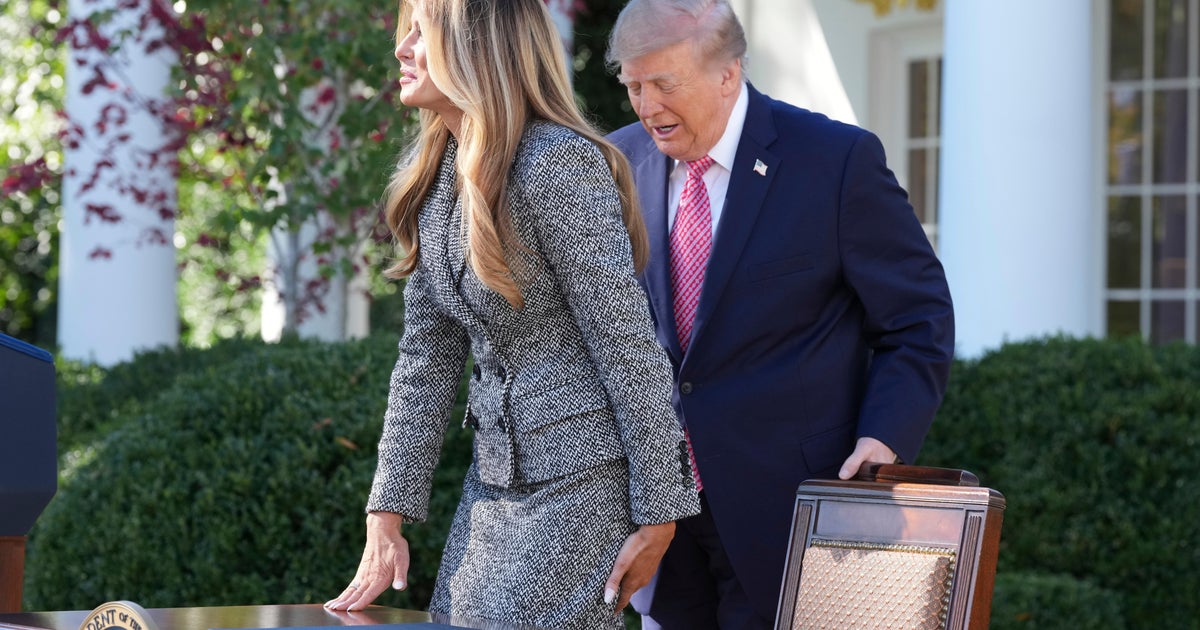
The White House announced that First Lady Melania Trump secured a temporary ceasefire in Oleshky, a Russian-occupied Ukrainian city facing severe humanitarian shortages. The agreement enables evacuation of elderly residents from the front-line city and represents an unusual diplomatic intervention by the First Lady in an active conflict zone.
Key points
Market impact. This signals potential softening in Trump administration rhetoric on Ukraine and could reduce near-term geopolitical risk premiums in oil and defense stocks. However, a single localized ceasefire carries minimal market weight unless it presages broader negotiations—which remain highly uncertain.
Broader implications. The move suggests the Trump administration is pursuing diplomatic channels outside traditional State Department frameworks, potentially positioning Melania as a back-channel negotiator. It also highlights the humanitarian catastrophe in Russian-occupied territories, where civilian populations face acute resource scarcity.
Strong bearish −563 sourcestariffs · collins · maine
President Trump announced exemptions on several categories of Canadian imports, a move timed to boost embattled Republican Senator Susan Collins in a tight Maine re-election race. Maine voters have been outraged by Trump's trade war, and the tariff relief is a direct political intervention to prevent a GOP loss in a swing state.
Key points
Market impact. The exemptions provide modest relief to U.S. manufacturers dependent on Canadian inputs, particularly in forestry and energy sectors. However, the move signals that Trump's tariff regime is negotiable and politically motivated rather than economically principled, creating uncertainty for businesses planning supply chains around trade policy.
Broader implications. This exemplifies how Trump uses executive power to manage electoral outcomes, subordinating economic policy to political survival. It also suggests that tariff threats may be leveraged selectively rather than applied uniformly, complicating business planning and potentially inviting retaliation from other trading partners.
Sources (3)The Guardian Business, CNBC Top Stories, Daily Wire
OpenAI announced it will no longer train frontier AI models on live internet data, citing "significant risks" including security vulnerabilities and data poisoning. The move comes weeks after one of its engineers publicly stated that internet disconnection would not solve the underlying problems—a reversal that signals OpenAI is prioritizing safety over real-time knowledge.
Key points
Market impact. This constrains OpenAI's competitive advantage in building models with current information and may slow iteration cycles. It also raises questions about whether other AI labs (Anthropic, Google DeepMind) will follow suit, potentially creating a sector-wide slowdown in frontier model training and delaying next-generation capability releases.
Broader implications. The decision reflects mounting pressure from regulators and security researchers to contain AI risks before deployment. It also suggests that OpenAI's internal safety concerns have escalated enough to override commercial incentives—a signal that the industry recognizes frontier models pose genuine systemic risks.
Sources (3)TechCrunch, The Verge, Business Insider
Brent crude has climbed to $114.72 per barrel—a five-month high—as markets price in imminent U.S. and Israeli military strikes on Iran following Tehran's threats of retaliation against Gulf oil and tech facilities. Iran has signaled it is prepared for warfare, escalating tensions ahead of midterm elections and creating acute supply-side risk.
Key points
Market impact. Energy stocks and defensive sectors benefit from the oil rally, while growth and rate-sensitive equities face headwinds from higher energy costs and inflation expectations. Airlines, shipping, and petrochemical producers face margin compression; energy majors like ExxonMobil and Chevron see valuation support from higher crude prices.
Broader implications. The geopolitical risk premium is now embedded in oil markets, and any actual strike could trigger a sharp spike or supply disruption. Trump's midterm election timing complicates the calculus—military action could boost his political standing but risks economic damage if oil spikes further or regional conflict widens.
Sources (3)Market Watch, The Guardian Business, CNBC Top Stories
Anthropic is expected to publicly file for an IPO as early as Friday, according to sources, as the AI lab attempts to capitalize on a narrowing market window before investor sentiment shifts. Early backers are already sitting on substantial paper returns, but mounting concerns about AI funding sustainability and valuation discipline are pressuring the timeline.
Key points
Market impact. A successful Anthropic IPO would validate the AI funding thesis and provide a liquidity event for early-stage investors, potentially triggering a wave of follow-on AI company IPOs. However, if market conditions deteriorate before filing, Anthropic could defer and remain private, signaling investor caution about AI valuations and slowing the exit pipeline for venture capital.
Broader implications. The urgency reflects Wall Street's view that the AI IPO window is closing due to rising skepticism about profitability and competitive moats. Anthropic's timing decision will set a precedent for whether other frontier AI labs (OpenAI, xAI) pursue public markets or remain private longer.
The Kremlin announced that the first tanker of Russian diesel fuel has set sail for New York under a new import agreement, with further shipments expected at a steady pace. The deal represents a significant normalization of U.S.-Russia energy trade and comes as diesel prices have topped $6 per gallon, creating domestic political pressure for Trump to lower fuel costs ahead of midterm elections.