CoreWeave's bonds have cratered to 81 cents on the dollar, yielding over 15%, while credit default swaps hit distress levels this week. The AI infrastructure provider's debt instruments are flashing red despite the company's central role in powering generative AI compute capacity.
Key points
Market impact. CoreWeave's credit deterioration is rattling the entire AI trade. Rising borrowing costs for infrastructure providers will compress margins across the sector and force a reckoning on whether the capex boom driving chip demand is economically sustainable. Investors are repricing AI-adjacent debt across the board.
Broader implications. This exposes a fundamental tension: the AI infrastructure buildout requires massive leverage, but the revenue models supporting that debt remain unproven. CoreWeave's distress suggests the market is questioning whether AI capex can justify its financing costs, potentially triggering a broader pullback in tech spending.
Chipmakers and software stocks are selling off sharply as investors confront the mounting debt incurred to build out AI infrastructure. The Nasdaq has dropped 2% amid a broader reassessment of whether the capital intensity of AI development can be justified by near-term returns.
Key points
Market impact. Nvidia, Broadcom, and other semiconductor leaders face renewed pressure as the cost of capital for their customers rises. A pullback in AI capex spending would directly hit chip demand and compress valuations for companies priced on aggressive growth assumptions.
Broader implications. This selloff marks a pivot from the AI-at-any-cost narrative that dominated 2024. If debt concerns persist, the entire tech sector could face a significant multiple compression as investors demand proof that AI investments generate returns.
The U.S. fiscal 2026 budget deficit has swelled to nearly $2 trillion, up 12% in a single year and the largest since 2021, representing 6.2% of GDP. Higher interest rates are inflating borrowing costs while the Trump administration continues spending on Iran operations and tariff refunds.
Key points
Market impact. Ballooning deficits will keep Treasury yields elevated and crowd out private investment. Bond markets are pricing in sustained fiscal pressure, which supports higher rates and headwinds for equities. This undermines the case for aggressive Fed rate cuts and pressures growth-dependent sectors.
Broader implications. Trump's promised fiscal discipline has evaporated. Without spending cuts or revenue increases, the deficit trajectory is unsustainable and will constrain policy flexibility for years. This structural imbalance could force a reckoning on entitlements and defense spending.
Sources (3)New York Times Business, CNBC Economy, Market Watch
Fed Chair Kevin Warsh stayed silent on rate guidance at the IMF gathering despite hot inflation data, explicitly stating the Fed is "no longer in the business of previewing its decisions." Traders are betting on an October rate hold, but Warsh's opacity creates uncertainty about the central bank's communication strategy.
Key points
Market impact. Warsh's rejection of forward guidance removes a key tool for managing market expectations. This increases volatility around Fed decisions and could trigger sharp repricing if inflation data surprises. Equity and bond markets will face more binary outcomes at each FOMC meeting.
Broader implications. Warsh is signaling a more hawkish, less predictable Fed posture than his predecessors. This shift toward opacity and away from consensus-building could amplify financial market swings and complicate corporate planning around borrowing costs.
Sources (3)CNBC Economy, New York Post Business, WSJ Economy
Netflix laid off 6% of its workforce (roughly 1,000 employees) and fired its chief content officer despite reporting strong revenues and profits. The cuts span product, tech, legal, and HR teams as the company confronts slowing revenue growth.
Key points
Market impact. Netflix's layoffs signal that even profitable streaming is hitting a growth ceiling. The company is prioritizing margin expansion over content investment, a defensive posture that could hurt subscriber retention and competitive positioning against Disney+ and other rivals.
Broader implications. This reflects a broader tech industry pattern: profitability without growth is triggering cost cuts. Netflix's move suggests the streaming wars are maturing into a low-growth, high-margin business—a far cry from the growth-at-all-costs narrative that justified earlier valuations.
Sources (3)New York Times Business, Business Insider, CBS Money Watch
Strong bearish −723 sourcescharacter.ai · disney · bankruptcy
Character.AI, an interactive chatbot platform with millions of users, filed for bankruptcy just five years after launch. Disney is acquiring some assets for $20 million and will pay $60 million to 66 employees from the startup, but the deal is insufficient to keep the company operating.
Key points
Market impact. Character.AI's collapse underscores the difficulty of monetizing consumer AI applications. Despite massive user bases, the company couldn't generate sufficient revenue to cover operating costs, signaling that consumer AI adoption does not automatically translate to viable business models.
Broader implications. This is a cautionary tale for the AI startup ecosystem. Many companies have raised capital on user growth metrics alone, but Character.AI's failure shows that scale without monetization is a path to bankruptcy. Expect more AI startups to face similar pressures as venture capital becomes more disciplined.
Tesla's unveiling of the Roadster Rocket—a flying sports car equipped with SpaceX rocket thrusters—has reignited speculation about a potential merger between Musk's two companies. Wall Street analysts are split on whether such a consolidation is feasible or strategically sound.
Key points
Market impact. A SpaceX-Tesla merger would create a conglomerate spanning electric vehicles, space launch, and satellite communications. Tesla shareholders would face significant dilution, while SpaceX's private valuation would need to be reconciled with public market expectations. The deal would likely trigger regulatory scrutiny.
Broader implications. Musk's flying car stunt is as much a recruitment tool as a product demo. A merger would consolidate his empire but could distract both companies from core operations. Investors should monitor whether this remains speculation or moves toward a formal proposal.
Bullish +213 sourcesstarshield · ukraine · white house
The White House ordered temporary limits on Starshield, SpaceX's satellite system used by Ukraine for battlefield communications and drone operations. The order came from inside the White House and affects Ukraine's ability to conduct military operations.
Key points
Market impact. Eutelsat's shares surged 19% on the news as investors see an opening for competing satellite providers. SpaceX's dominance in satellite communications faces a political ceiling, creating opportunities for traditional telecom operators to capture defense and government contracts.
Broader implications. This reveals the geopolitical constraints on Musk's space empire. The Trump administration is reasserting control over critical infrastructure, signaling that SpaceX's role in national security and foreign policy will be subject to political oversight. Expect more friction between Musk and the government.
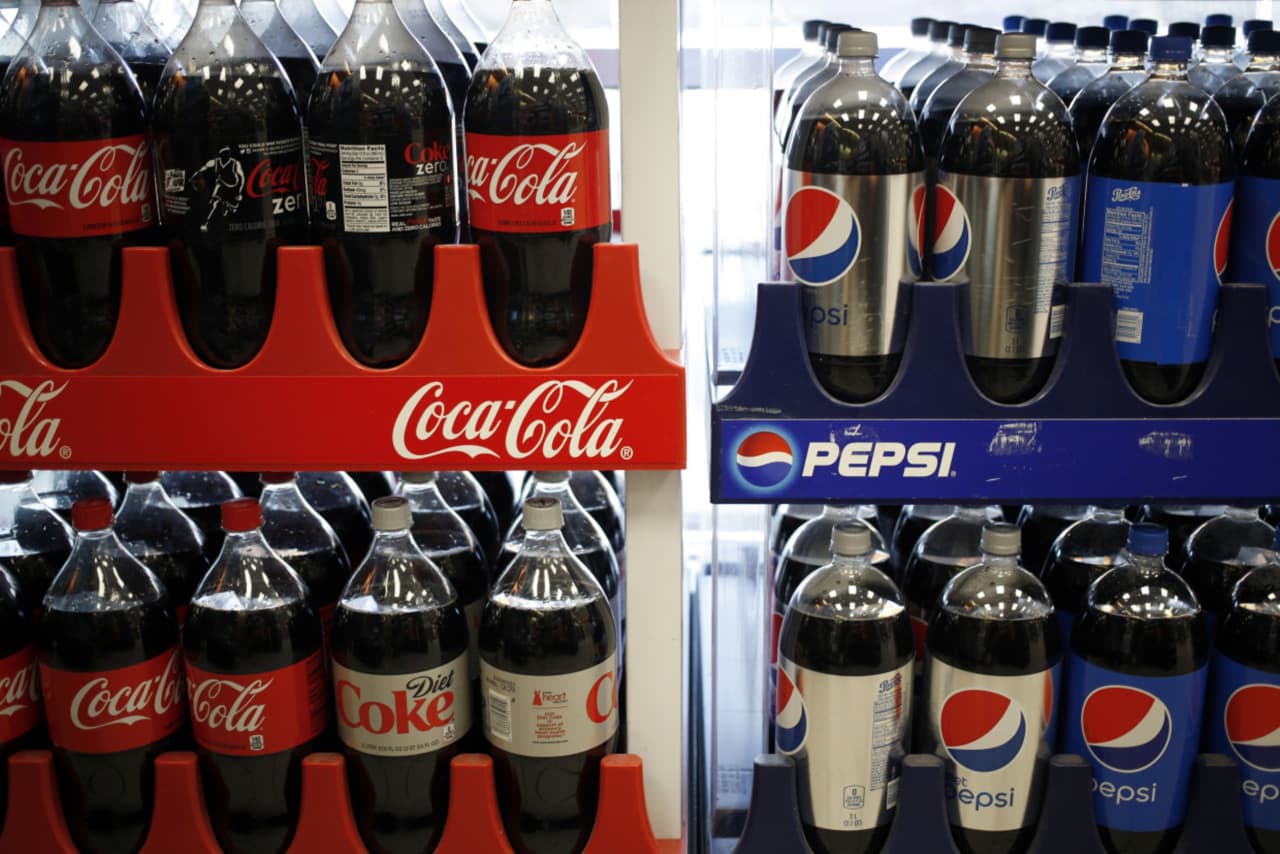
KFC is switching from PepsiCo to Coca-Cola as its beverage supplier for U.S. restaurants for the first time in decades. The move reflects broader momentum toward Coke as consumers shift away from Pepsi, compounding PepsiCo's sales struggles.
Key points
Market impact. PepsiCo loses a major distribution channel and volume commitment. Coca-Cola gains shelf space and consumer touchpoints at a critical QSR partner. The deal signals that PepsiCo's beverage division is losing competitive ground, pressuring margins and market share in a key segment.
Broader implications. This is a structural shift in the soda wars. PepsiCo's diversification into snacks and non-carbonated beverages is no longer offsetting losses in its core cola business. Coca-Cola's focus on its flagship product is paying dividends as consumer preferences consolidate around the stronger brand.
Sources (3)Market Watch, New York Post Business, CNBC Business