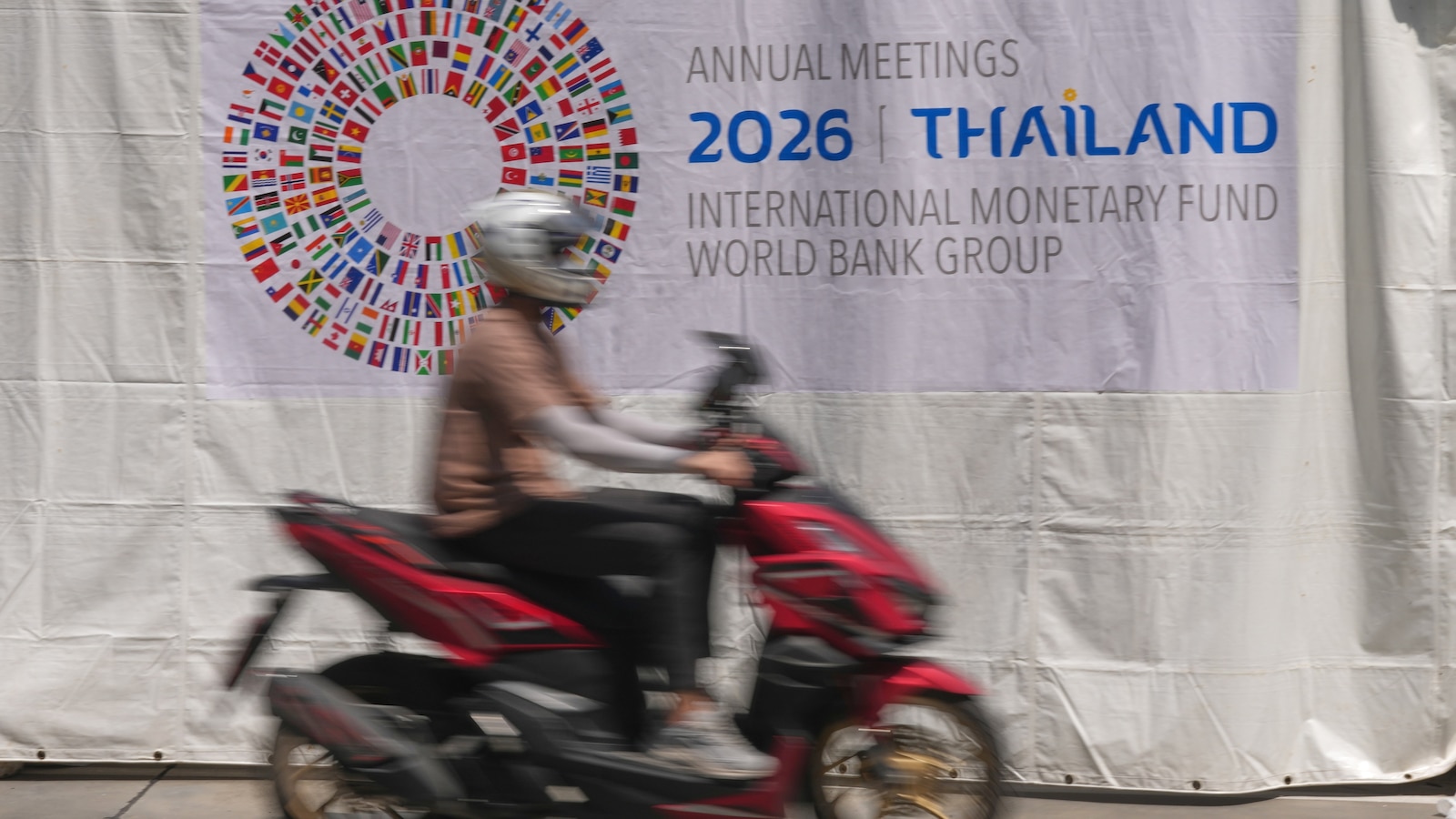
The IMF raised its 2026 global growth forecast to 3.1% and upgraded 2025 expectations, citing AI investment offsetting geopolitical shocks. However, the fund warned that borrowing costs, inflation, depleted oil reserves, and overstretched government budgets could trigger a sharp slowdown in 2027 and test global economic resilience.
Key points
Market impact. Near-term relief for risk assets and tech stocks, but long-duration bonds face pressure as the IMF signals higher-for-longer rates and potential yield spikes. Energy stocks benefit from supply concerns; defensive sectors may outperform into 2027 as growth forecasts deteriorate.
Broader implications. Central banks face a narrow window to manage inflation without crushing growth. The IMF's K-shaped recovery narrative—winners in AI and energy-independent nations, losers in commodity-dependent economies—will drive capital flows and policy divergence through 2027.
Strong bearish −651 sourceimf · ai valuation · financial stability
The IMF warned that elevated AI stock valuations combined with rising corporate and government debt create conditions for a disorderly market correction that could ripple through the global financial system. The fund also cited cyber-attack risks as an emerging threat to financial infrastructure.
Key points
Market impact. Semiconductor and AI-related equities face renewed volatility; mega-cap tech concentration risk (now at levels rivaling the 2000 dot-com peak) becomes a focal point for portfolio rebalancing. Credit spreads on leveraged tech firms may widen as institutional investors reassess tail risks.
Broader implications. Regulators globally will face pressure to tighten AI sector oversight and debt limits. A correction here could trigger forced selling in correlated assets and strain emerging-market currencies dependent on capital inflows.
Strong bearish −664 sourceshouthis · saudi arabia · energy · geopolitics
Houthi forces fired a barrage of missiles at Riyadh's main airport, forcing closure and prompting the FAA to warn U.S. carriers of safety risks over Saudi airspace. Delta postponed its inaugural nonstop service to Riyadh from October 23 to March, and the attacks are adding pressure to Saudi Arabia's economy as it struggles to maintain energy production and diversification targets.
Key points
Market impact. Oil prices stabilize near current levels as supply concerns offset Trump's "energy ceasefire" rhetoric; aviation and tourism stocks in the region face headwinds. Saudi Aramco (2222.SA) and regional energy plays may see volatility if attacks escalate or persist, though global crude markets remain well-supplied.
Broader implications. Trump administration's military response options are now in focus; escalation risks could disrupt Middle East geopolitics and energy flows. Saudi Arabia's Vision 2030 economic diversification agenda faces renewed uncertainty as security concerns deter foreign investment and tourism.
Sources (4)CBS News, CNBC Business, New York Times Business
Strong bullish +454 sourcestrump · ukraine · energy ceasefire · russia
Trump announced via social media that Ukraine and Russia had agreed to an "energy ceasefire," but Ukrainian officials immediately denied being informed of any such deal. Zelenskyy said Ukraine would support a truce if Russia agrees, but Moscow has not commented, and oil prices fell initially on the announcement before stabilizing as credibility evaporated.
Key points
Market impact. Oil volatility compressed as markets discounted the ceasefire claim; energy stocks and commodities remain range-bound pending clarity. If a genuine truce emerges, crude could face downside pressure; if tensions escalate, upside risk returns to the fore.
Broader implications. The episode underscores Trump's unpredictability and the fragility of any Ukraine-Russia settlement without verified multilateral agreement. Geopolitical risk premiums in energy and defense stocks remain elevated as the conflict's trajectory remains uncertain.
Sources (4)The Daily Caller, CNBC Top Stories, BBC US
Bullish +203 sourcesbroadcom · anthropic · ai financing · debt
Anthropic's IPO filing revealed $161 billion in Broadcom commitments, backed by a new $60 billion debt package and AI XPV funding. ASML CEO Christophe Fouquet sees the AI chip boom extending beyond 2028, but Broadcom warned that financing constraints could become a bottleneck for the sector's continued expansion.
Key points
Market impact. Broadcom (AVGO) faces credit risk scrutiny as debt levels rise; semiconductor equipment makers like ASML benefit from extended cycle visibility, but financing stress could slow AI capex growth. Capital-intensive AI infrastructure plays may see valuation compression if debt markets tighten.
Broader implications. The AI boom's sustainability now hinges on debt markets' willingness to fund mega-scale infrastructure. A credit crunch would force consolidation and slow AI adoption, validating the IMF's warnings on leverage and systemic risk in the sector.
Bullish +174 sourcesnobel prize · economics · hall · woodford
Robert E. Hall and Michael Woodford, both U.S. economists, won the 2024 Nobel Prize in Economics for developing models that help central banks and governments stabilize boom-and-bust cycles. Their work underpins the monetary policy frameworks used by the Federal Reserve, ECB, and other major institutions.
Key points
Market impact. Symbolic validation of dovish policy frameworks; markets may interpret the award as intellectual support for accommodative central banking. No immediate market move, but reinforces the narrative that policymakers have tools to manage crises—potentially supporting risk assets near term.
Broader implications. The award highlights the academic foundation for modern macroeconomic management, though critics argue Hall-Woodford models underestimated inflation risks in 2021-2023. As central banks navigate 2025-2027 headwinds, their frameworks will face real-world tests.
Sources (4)The Guardian Business, CBS Money Watch, CNBC Economy +1
The S&P 500 bull market marked its fourth anniversary on October 12, having climbed nearly 120% since its 2022 low. However, AI-related companies now control a share of the index that rivals the most dangerous concentration episodes in market history, with tech yields threatening to derail the rally if rates remain elevated.
Key points
Market impact. Breadth deterioration risk is acute; a rotation out of mega-cap tech into value or small-cap names could trigger sharp volatility. Historically, bull markets do not die of old age, but concentration-driven corrections are severe and swift when they occur.
Broader implications. Reaching a fifth anniversary will require either broadening of gains or sustained AI narrative strength. Rising yields and credit spreads pose the primary near-term threat; a 2027 slowdown (per IMF) could force a reckoning with valuations.
Neutral 03 sourcesmicrosoft · ai regulation · brad smith
Microsoft President Brad Smith argued that AI faces less regulatory scrutiny than milk cartons and washing machines, calling for urgent global AI rules and positioning the UK as the best-placed nation to lead regulatory efforts. Smith's comments reflect tech industry anxiety over ad-hoc regulation and competitive disadvantage.
Key points
Market impact. Regulatory clarity could reduce legal and compliance costs for large AI players like Microsoft (MSFT), potentially benefiting established tech giants over startups. However, strict rules could slow innovation and capex cycles, pressuring semiconductor and cloud infrastructure stocks.
Broader implications. Smith's framing suggests tech companies are preparing for tighter oversight and seeking to shape the regulatory narrative. UK regulatory leadership could fragment global AI standards, creating compliance complexity and fragmented markets.
Sources (3)The Daily Caller, TechCrunch, BBC Business
Starbucks explicitly denied reports of a potential bid for Chipotle Mexican Grill, stating it is focused on organic growth initiatives. The denial came after market speculation about a possible combination of the two restaurant giants.
Sources (3)CBS Money Watch, YouTube - Yahoo Finance, CNBC Business