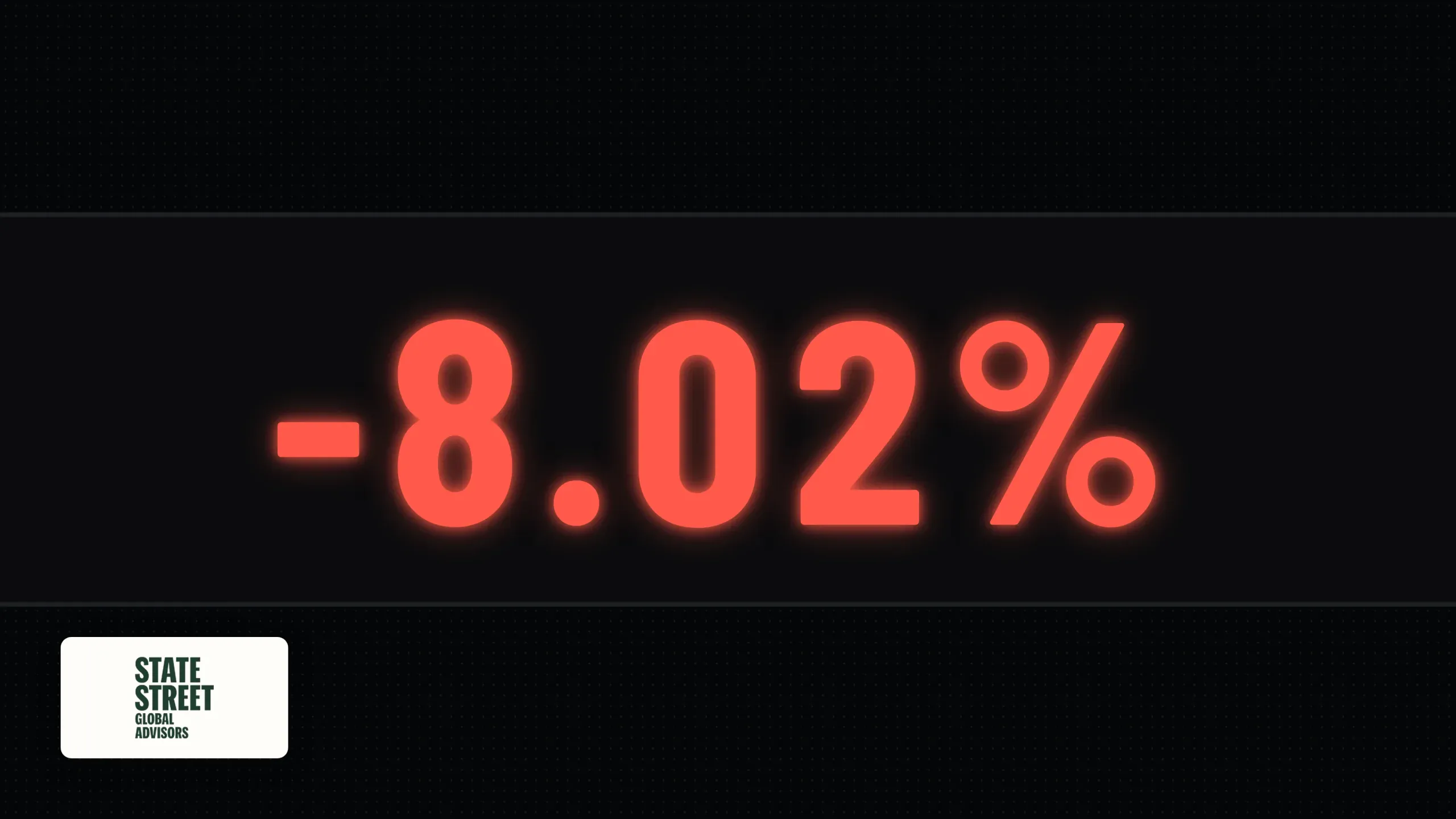
The Nasdaq composite turned negative for the year Friday after a five-day rout that wiped out all 2026 gains, driven by investor skepticism over the profitability and viability of artificial intelligence investments. The selloff represents the worst week for the index since 2020, with all 11 S&P 500 sectors finishing down more than 1% for the first time since April 2025.
Key points
Market impact. The S&P 500 and Dow Jones Industrial Average both entered correction territory, down 10% from records, while the Nasdaq's decline erased nearly all of 2026's gains in a single week. Nvidia, the semiconductor bellwether, posted its longest weekly losing streak since 2020, with the stock's weakness rippling across data center and chip-related equities. Dividend-focused investors are reassessing portfolios as volatility spikes.
Broader implications. The selloff signals a fundamental repricing of AI's near-term ROI, with investors questioning whether trillion-dollar data center buildouts will generate returns commensurate with their costs. This marks a sharp reversal from the AI-driven bull market that dominated 2024-2025, potentially reshaping sector leadership and forcing tech companies to justify capital expenditure plans.
Sources (3)The Daily Caller, NPR Business, The Guardian Business
Anthropic raised $81 billion in its Nasdaq debut Thursday, marking a record IPO for an AI company, but the stock immediately faced headwinds as the broader market entered a severe correction. Anthropic shares slumped on their second day of trading Friday as the AI selloff intensified, with investors questioning valuations across the sector.
Key points
Market impact. The IPO's timing exposed a stark disconnect between Silicon Valley's confidence in AI's future and Wall Street's sudden skepticism. Despite the record raise, Anthropic's stock weakness underscored that even high-profile debuts cannot insulate companies from sector-wide repricing, particularly when profitability timelines remain uncertain.
Broader implications. Anthropic's rocky trading debut signals that the IPO window for AI companies may be closing as investor appetite for unprofitable, capital-intensive tech firms evaporates. The company's $81 billion valuation now faces immediate stress tests, raising questions about whether other AI unicorns will accelerate or delay public market plans.
Sources (3)CNBC Top Stories, New York Post Business, The Guardian Business
The SEC is investigating Nvidia's accounting practices as the company reels from the sudden departure of CEO Jensen Huang, who reportedly faced allegations tied to Chinese espionage concerns and his wife's involvement in chip smuggling. Huang's management style, characterized by fear-based leadership, is now under scrutiny as the company navigates regulatory and reputational fallout.
Key points
Market impact. Nvidia's stock weakness this week is compounded by regulatory risk and leadership uncertainty at the world's most valuable semiconductor company. The SEC probe adds legal jeopardy to a stock already battered by AI viability concerns, potentially triggering further institutional selling if accounting irregularities are substantiated.
Broader implications. Huang's ouster and the SEC investigation expose governance vulnerabilities at the heart of the AI infrastructure buildout. If Nvidia's accounting or compliance practices are compromised, it could undermine investor confidence in the entire semiconductor and data center supply chain at a critical moment when that confidence is already fractured.
Strong bearish −513 sourcestrump · data centers · tax
President Trump threatened a "tremendous tax" on U.S. technology companies that build artificial intelligence data centers outside the country, signaling an aggressive industrial policy aimed at keeping AI infrastructure domestic. The threat comes as major tech firms have accelerated overseas expansion to reduce costs and navigate regulatory complexity.
Key points
Market impact. The threat adds policy uncertainty to an already volatile tech sector, potentially raising capex costs for Nvidia, Meta, Google, and Amazon if they are forced to redirect data center investments to the U.S. Higher domestic construction costs could compress margins and delay AI infrastructure deployment, further pressuring tech valuations.
Broader implications. Trump's move reflects a broader shift toward AI nationalism and industrial protectionism, prioritizing domestic chip and data center production over global efficiency. If implemented, such tariffs could reshape the geopolitics of AI development and slow the global rollout of AI services, while potentially benefiting U.S. construction and real estate sectors.
Sources (3)The Daily Caller, CBS News, New York Times Business
The Dow Jones Industrial Average entered correction territory for the first time since October 2008, shedding 1,100 points in a single session as five brutal trading days erased nearly all of the index's 2026 gains. Retirees dependent on dividend income are now facing pressure as market volatility raises questions about payout sustainability.
Key points
Market impact. The Dow's weakness signals that large-cap, dividend-paying stocks offer no safe harbor in a broad market correction. Investors are rotating out of high-priced dividend payers, creating selling pressure that could force retirees to liquidate shares at depressed prices to cover living expenses—crystallizing losses at the worst possible time.
Broader implications. The Dow's correction challenges the conventional wisdom that blue-chip dividend stocks provide downside protection. If the selloff persists, it could force a reckoning among income-focused investors about portfolio construction and the sustainability of yield-chasing strategies in a higher-volatility regime.
The Russian cargo ship Sparta II caught fire in international waters west of Gogland Island in the Baltic Sea after a drone strike, with the crew evacuating. Finland's Defence Forces confirmed the incident, marking an escalation in maritime warfare in a strategically critical shipping corridor.
Key points
Market impact. The attack heightens risks for shipping insurance, energy logistics, and supply chain costs in Northern Europe. Elevated maritime risk premiums could push up insurance costs for Baltic trade and increase pressure on European energy prices if Russian cargo flows are disrupted.
Broader implications. The incident underscores the vulnerability of critical Baltic shipping lanes to military action and signals potential escalation in hybrid warfare tactics targeting commercial infrastructure. Geopolitical risk premiums for European equities and commodities may widen if attacks on merchant vessels become routine.
Iran attacked three tankers and unveiled a new missile launcher at an underground facility, signaling a military escalation in the Middle East. The dual display of offensive capability and weapons development reflects Tehran's willingness to challenge regional shipping and Western interests.
Key points
Market impact. Attacks on tankers elevate crude oil risk premiums and shipping insurance costs through the Strait of Hormuz, a chokepoint for global energy supplies. Energy markets may price in higher geopolitical risk if Iranian military actions disrupt oil flows or trigger retaliatory strikes.
Broader implications. Iran's escalation reflects broader Middle East tensions and could trigger a cycle of tit-for-tat military actions that destabilize energy markets and global trade. The timing coincides with market volatility driven by AI concerns, creating a dual-risk environment where geopolitical shocks could amplify financial market stress.
Rockstar Games' Grand Theft Auto VI generated nearly $4 billion in first-day sales, shattering the previous record held by GTA V ($800 million in 2013) and establishing itself as the biggest entertainment launch ever. The game has already achieved a Metacritic score of 99 and Game of the Year nominations.
Key points
Market impact. Despite the blockbuster performance, Take-Two Interactive's stock has underperformed as investors remain focused on broader market weakness and AI concerns. The disconnect between record-breaking sales and flat stock performance reflects the current risk-off sentiment overwhelming individual company catalysts.
Broader implications. GTA 6's success demonstrates resilience in consumer spending on entertainment despite market turmoil, but Take-Two's stock weakness suggests that even mega-hit franchises cannot overcome sector-wide valuation compression. The gaming industry may face pressure if investors continue to prioritize macro concerns over earnings growth.
President Trump announced plans to work with the incoming Democratic Congress to cap credit card interest rates, signaling a rare bipartisan effort on consumer finance regulation. The proposal targets what Trump characterized as predatory lending practices that burden American households.