Anthropic priced its IPO at $83 per share, above the $70–$78 range, valuing the Claude chatbot maker at $1.5 trillion on a fully diluted basis. The company begins trading on Nasdaq under ticker ANT on Thursday, marking one of the largest IPOs in history and a watershed moment for AI-native companies entering public markets.
Key points
Market impact. The pricing signals sustained institutional appetite for AI infrastructure plays despite volatility in mega-cap tech. Amazon will own just under 15% post-IPO with options to increase; Google holds a close second stake. The deal validates the AI boom narrative but also concentrates capital among a handful of players, potentially fueling rotation concerns away from Nvidia and other established chip names.
Broader implications. Anthropic's debut tests whether the market can absorb a $1.5 trillion valuation for a company with limited revenue history. Success could unlock a wave of AI startup IPOs; failure could trigger a reassessment of AI valuations and expose the sector to bubble-burst risk that former SEC Chair Gary Gensler has publicly warned about.
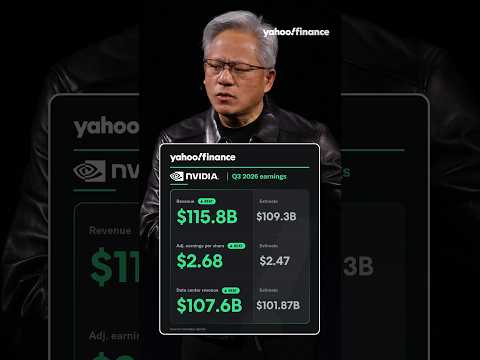
Nvidia delivered a beat-and-raise quarter with stock rising over 3% in premarket, but the earnings call marked interim CEO Colette Kress's first guidance as Jensen Huang's sudden departure—amid personal scandals—leaves a leadership void. JPMorgan analysts flagged additional upside potential, yet the transition creates uncertainty around strategic direction.
Key points
Market impact. The earnings beat temporarily stabilized Nvidia after recent weakness tied to Anthropic IPO rotation trades. However, the leadership gap may weigh on the stock if investors perceive execution risk or if Huang's departure signals deeper governance concerns. Nvidia's dominance in AI chips remains intact, but the narrative has shifted from visionary leadership to operational continuity.
Broader implications. Huang's exit raises questions about founder-led tech companies' resilience to scandal and succession planning. For the broader AI ecosystem, Nvidia's stability is critical; any sustained leadership instability could accelerate diversification efforts by cloud providers and chip designers seeking alternatives.
Federal Reserve Governor Christopher Waller said the central bank may need to raise rates by 50 basis points or more to "shock" inflation out of the system if price pressures persist above the 2% target. Bitcoin dropped below $63,000 on the hawkish rhetoric, and the VIX surged as options traders priced in renewed rate-hike risk.
Key points
Market impact. Waller's comments contradict recent Fed dovishness and reignite expectations for aggressive tightening, pressuring risk assets and supporting the dollar, which hit a 19-month high. Growth stocks and crypto are most vulnerable; bond yields will likely rise, compressing valuations for unprofitable AI startups and high-multiple tech names.
Broader implications. The Fed's internal debate over inflation persistence suggests policymakers remain divided on the path forward. A 50-basis-point move would be extraordinary and signal loss of confidence in the disinflationary narrative that has underpinned the AI rally and broader equity recovery.
UK inflation accelerated to 3.6% in October, a 1-year high, driven by record petrol and diesel prices amid U.S.–Iran tensions and broader energy market volatility. The Bank of England faces renewed pressure to hold rates steady or risk further tightening as cost-of-living pressures ripple through the broader economy.
Key points
Market impact. Sterling may face headwinds if the BoE signals further hawkishness; UK gilt yields could rise, pressuring government borrowing costs. Energy-intensive sectors and consumer discretionary stocks face margin compression. The inflation surprise also complicates the BoE's ability to cut rates in 2025, supporting the pound but weighing on growth-sensitive assets.
Broader implications. The UK's energy vulnerability mirrors broader Western exposure to Middle East geopolitical risk. If Iran–US tensions escalate further, oil prices could spike, forcing central banks globally to reassess disinflationary assumptions and potentially triggering a stagflation scare.
The Pentagon failed its ninth consecutive financial audit, with the Defense Department's inspector general ranking fraud elimination as a top priority. Despite claims of progress in organizing finances, the department cannot pass basic accountability tests while requesting $1.5 trillion in taxpayer funding.
Key points
Market impact. Defense contractor stocks may face scrutiny if Congress ties future appropriations to audit compliance, though the political will to enforce such conditions remains unclear. The audit failure could embolden critics of defense spending and create headwinds for military-industrial complex valuations if budget hawks gain leverage in appropriations debates.
Broader implications. The persistent audit failure signals deep structural problems in Pentagon financial management and raises questions about stewardship of defense dollars. In a fiscal environment where debt concerns are rising, this becomes a political liability for defense spending advocates and a potential flashpoint in budget negotiations.
The Commerce Department announced interim rules requiring licenses for AI chip exports if they provide compute access to foreign entities, closing a loophole that allowed Chinese firms to access advanced chips via overseas data centers. The move follows the Nvidia scandal and reflects escalating U.S.–China tech competition.
Key points
Market impact. Nvidia and other chip exporters face reduced addressable market in China and potential revenue headwinds, though the company has already ceased China sales. Cloud providers offering remote compute services may need to restructure offerings or face compliance costs. The rules could accelerate Chinese domestic chip development efforts and geopolitical decoupling in semiconductors.
Broader implications. The export controls represent a strategic shift toward tech nationalism and supply-chain fragmentation. China will likely retaliate with its own restrictions, deepening bifurcation of the global AI ecosystem and raising costs for multinational tech companies operating across borders.
Sources (3)New York Post Business, CBS Money Watch, TechCrunch
Satya Nadella predicted that AI agents will fundamentally reshape the economics of the web by automating tasks and reducing reliance on advertising-driven business models. The forecast signals that traditional tech giants dependent on ad revenue—including Amazon and Google—face structural headwinds from AI automation.
Key points
Market impact. Alphabet and Amazon valuations could face pressure if AI agents reduce search queries and e-commerce browsing, eroding ad inventory and conversion rates. Microsoft, which is investing heavily in OpenAI and AI infrastructure, positions itself as a beneficiary of this transition. Ad-tech and digital marketing stocks warrant closer scrutiny for margin compression.
Broader implications. Nadella's comments reflect a fundamental shift in how tech leaders view AI's economic impact—not as an enhancement to existing business models, but as a replacement. This threatens the advertising duopoly that has funded the internet for two decades and could accelerate consolidation around AI-native platforms.
Iran's military targeted U.S. drone and missile installations at Kuwait's Ali Al Salem air base and other Gulf assets in retaliation for U.S. defensive strikes, with Bahrain and Kuwait reporting intercepted attacks. The escalation marks a dangerous expansion of the U.S.–Iran proxy conflict beyond previous boundaries.
Key points
Market impact. Oil prices face upside risk if tensions sustain or widen; Brent crude could spike if shipping lanes or production facilities are threatened. Energy stocks and defensive sectors benefit; growth and rate-sensitive assets face headwinds. The geopolitical premium embedded in energy prices will likely persist, supporting inflation expectations and complicating Fed policy decisions.
Broader implications. The escalation signals a breakdown in regional de-escalation efforts and raises the risk of direct U.S.–Iran military confrontation. A wider conflict could disrupt global energy supplies, trigger stagflation, and force the U.S. to choose between military commitments in the Gulf and Asia-Pacific, complicating strategic priorities.
Sources (3)Fox News World, CBS News, CNBC Top Stories